When Should Wisdom Teeth Be Removed?
Wisdom teeth do not always need to be removed, but in many people, there is not enough room in the mouth for them to come in properly. When this happens, wisdom teeth can become painful, infected, or damage nearby teeth.
Many people do not notice a problem until the wisdom tooth is already causing pain. In other cases, a dentist may recommend removing them before they begin causing problems.
Here are some of the most common signs that it may be time to remove your wisdom teeth.
Pain or Pressure in the Back of Your Mouth
One of the first signs of a wisdom tooth problem is pain or pressure in the very back of the mouth. You may notice:
-
Soreness behind your last molars
-
Pain when chewing
-
Pressure that comes and goes
-
Jaw pain or headaches
As wisdom teeth try to come in, they can push against other teeth and irritate the surrounding gums.
Swollen or Infected Gums
Partially erupted wisdom teeth often create a flap of gum tissue that traps food and bacteria. This can lead to:
-
Red, swollen gums
-
Pain when brushing or chewing
-
Bad breath
-
A bad taste in your mouth
-
Pus or drainage near the tooth
This type of infection is common around wisdom teeth and usually does not go away on its own.
Wisdom Teeth That Are Coming in Sideways
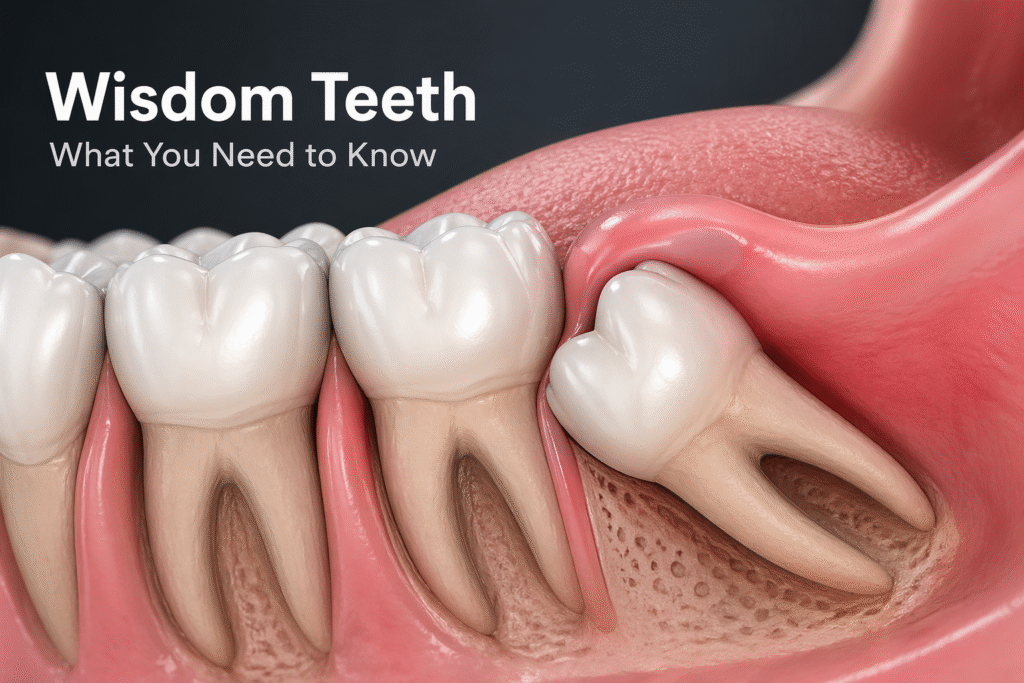
Many wisdom teeth do not come in straight. They may grow sideways, become stuck under the gums, or push into the tooth next to them. This is called an impacted wisdom tooth.
Impacted wisdom teeth can:
-
Damage nearby teeth
-
Cause cavities between teeth
-
Lead to infection
-
Create crowding
-
Cause pain and swelling
An X-ray can show whether your wisdom teeth are impacted and whether they should be removed.
Crowding or Shifting Teeth
Some people notice their teeth feel more crowded as their wisdom teeth come in. Wisdom teeth can place pressure on the other teeth, especially if there is not enough room in the mouth.
You may notice:
-
Your teeth feel tighter
-
Your bite feels different
-
Food gets trapped more easily
-
Teeth seem to be shifting
While wisdom teeth are not always the only cause of crowding, they can contribute to problems when there is not enough space.
Cavities or Damage to Nearby Teeth
Wisdom teeth are very difficult to clean because they are so far back in the mouth. Food and bacteria often collect around them, making them more likely to develop cavities.
Sometimes a wisdom tooth can also damage the tooth in front of it. If this happens, you may end up needing treatment on both teeth.
Removing the wisdom tooth early can often prevent more serious problems later.
Is It Better to Remove Wisdom Teeth Before They Hurt?
In many cases, yes. Wisdom teeth are often easier to remove before they become painful or infected. Removing them earlier may mean:
-
A simpler procedure
-
Faster healing
-
Less risk of infection
-
Less damage to nearby teeth
Many dentists recommend evaluating wisdom teeth in the late teens or early twenties, even if they are not causing symptoms yet.
What Happens During a Wisdom Tooth Consultation?
At your visit, we will take an X-ray and examine your wisdom teeth to see:
-
If they are impacted
-
If there is enough room for them
-
Whether they are causing damage or infection
-
If they should be removed now or monitored
At Dr. Pull It, our exam and X-ray starts at $49. Wisdom teeth extraction starts at $350. We will explain your options clearly and help you decide whether wisdom tooth removal is the right choice.
Experiencing tooth pain? Learn more about our emergency tooth extraction services.
If you are having pain, swelling, or pressure in the back of your mouth, do not wait for it to get worse. Early treatment can help you avoid a more serious dental emergency later.
Have questions or dealing with tooth pain? Contact us today.