How to Prevent Dry Socket After Wisdom Teeth Extraction
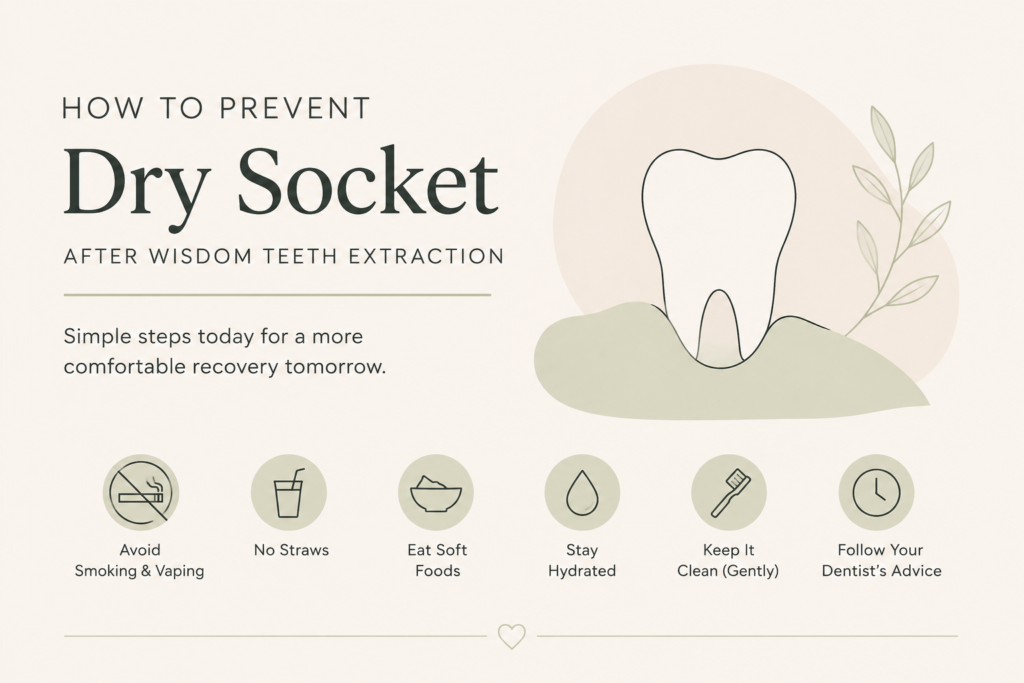
Dry socket is one of the most common concerns after wisdom teeth removal. While it doesn’t happen to everyone, following your dentist’s post-operative instructions can significantly reduce your risk and help ensure a smooth recovery.
Here’s what you need to know about dry socket and how to prevent it.
What Is Dry Socket?
After a wisdom tooth is removed, a blood clot forms in the extraction site. This clot protects the underlying bone and nerves while your mouth heals.
A dry socket (alveolar osteitis) occurs when:
- The blood clot becomes dislodged too early.
- The clot dissolves before healing begins.
- The underlying bone becomes exposed.
Without this protective clot, the area becomes painful and healing is delayed.
What Does Dry Socket Feel Like?
Unlike normal post-operative soreness, dry socket typically causes:
- Severe, throbbing pain
- Pain that starts 2–5 days after surgery
- Pain that radiates to the ear, jaw, or temple
- Bad breath or an unpleasant taste
- An empty-looking extraction site where the blood clot is missing
If you experience these symptoms, contact your dental provider promptly.
10 Ways to Prevent Dry Socket
1. Avoid Drinking Through a Straw
The suction created by a straw can pull the blood clot out of the extraction site.
Drink directly from a cup instead.
2. Don’t Smoke or Vape
Smoking and vaping are among the biggest risk factors for dry socket.
Nicotine reduces blood flow and the suction involved with smoking or vaping can dislodge the clot.
Your dentist may recommend avoiding tobacco products for several days after surgery.
3. Leave the Blood Clot Alone
The blood clot is your body’s natural bandage.
Avoid:
- Touching it with your fingers
- Poking it with your tongue
- Picking at the extraction site
4. Eat Soft Foods
Choose foods that require very little chewing during the first several days.
Good choices include:
- Yogurt
- Applesauce
- Mashed potatoes
- Scrambled eggs
- Oatmeal
- Smooth soups
- Cottage cheese
Avoid crunchy or hard foods that may disturb the extraction site.
5. Avoid Vigorous Rinsing
During the first 24 hours, avoid forcefully rinsing your mouth.
After the first day, gently rinse with warm salt water if instructed by your dentist.
6. Follow Your Medication Instructions
Take all prescribed or recommended medications exactly as directed.
Pain medications and anti-inflammatory medications can help you stay comfortable during recovery.
7. Get Plenty of Rest
Avoid strenuous exercise for the first 48–72 hours.
Heavy lifting and vigorous activity may increase bleeding and interfere with healing.
8. Practice Gentle Oral Hygiene
You can brush your other teeth normally, but avoid brushing directly over the extraction sites during the early stages of healing.
Keeping the rest of your mouth clean helps reduce bacteria while allowing the surgical area to heal.
9. Stay Hydrated
Drink plenty of water throughout the day.
Avoid alcoholic beverages during the initial healing period unless your dentist advises otherwise.
10. Attend Any Recommended Follow-Up Appointments
Your dentist can check that healing is progressing normally and answer any questions about your recovery.
Who Is at Higher Risk for Dry Socket?
Some patients have a higher chance of developing dry socket, including:
- Smokers or people who vape
- Patients with difficult or impacted wisdom teeth
- Those who don’t follow post-operative instructions
- Patients with poor oral hygiene
- Individuals with a history of dry socket
Even if you’re at higher risk, carefully following your aftercare instructions can greatly reduce your chances.
Is Dry Socket Common?
Dry socket is not common for most patients, but it can occur after wisdom teeth removal, particularly if the blood clot becomes disturbed.
Fortunately, most patients recover without developing dry socket when they follow their dentist’s instructions.
What Should I Do If I Think I Have Dry Socket?
Contact your dental provider if you notice:
- Severe pain that gets worse after the first few days
- Pain spreading to your ear or jaw
- Bad taste or odor
- A visible empty socket
- Pain that isn’t relieved by medication
Treatment is available to help relieve discomfort and support healing.
Frequently Asked Questions
When is dry socket most likely to happen?
Dry socket usually develops 2 to 5 days after wisdom teeth removal.
Can I prevent dry socket completely?
There’s no way to guarantee it won’t happen, but following your post-operative instructions significantly lowers your risk.
Does everyone get dry socket?
No. Most patients heal normally without developing dry socket.
Wisdom Teeth Removal in Burlington, WI
At Dr. Pull It, we provide wisdom teeth removal, including treatment for impacted wisdom teeth, in a comfortable and caring environment. We provide detailed aftercare instructions and are here to answer any questions during your recovery.
We proudly:
- Accept Wisconsin BadgerCare
- Offer affordable self-pay options
- Provide same-week appointments whenever possible
- Treat both simple and impacted wisdom teeth
If you’re experiencing wisdom tooth pain or think you may need your wisdom teeth removed, we’re here to help.
Schedule your wisdom teeth evaluation today and let our team help you recover comfortably.
Continue Reading
For more recovery tips, explore our related guides:
- How Long Does Wisdom Teeth Recovery Take? A Day-by-Day Guide
- Do I Need My Wisdom Teeth Removed? 10 Signs It’s Time